Posts

Mythologizing July

Image
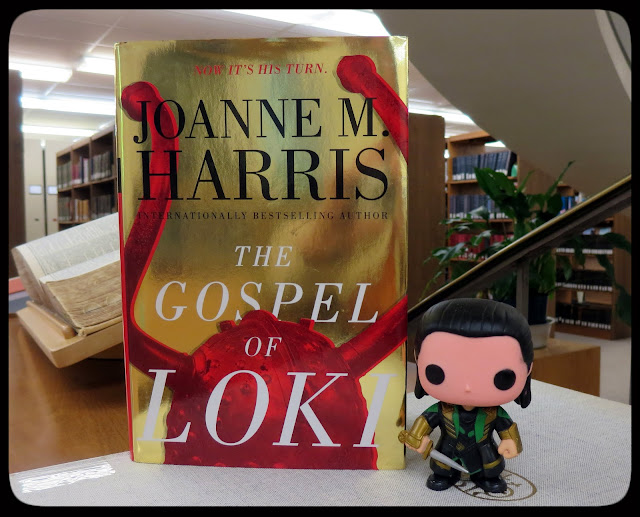
For July, we're going to take a look at modern mythology - a special type of retold tale! Retold tales in general are a neat genre - they take familiar and important stories, ones that have already had a great deal of impact on our lives, and twist them up a bit. By introducing new themes and sometimes controversial ideas into a familiar setting, the author can lead the reader to new perspectives and a chance to reevaluate our own long-held beliefs and cherished traditions in someone else's context. A comfortable story made discomforting can be a powerful thing. Mythology retold is especially interesting - we can see the gods wrestling with the same issues we face, and learn to look at each other differently. This month's Main Read was chosen by Loki - he thinks it's about time someone heard his  side of events. Check it out: The Gospel of Loki I know a tale, O sons of earth. I speak it as I must. Of how nine trees gave life to Worlds That giants held ...

What If? Alternate History in June

Image
[First off, an apology: this was supposed to be a  nonfiction month. We were going to look at historical nonfiction. Why did we end up with alternate history? I'll answer that in a bit.] "What if...?" is probably a question better asked before making big decisions - but, occasionally, it's fun to ask afterwards, too. Alternate history does just that - questioning what might have happened had a few changes been made to the past. Usually, the author investigates the question pretty straight-forwardly, just presenting the story as though history had been different; sometimes, though, the author has something (like time travelers) actually change history. Either way, the author can play with how one or a few simple changes could ripple into major differences in parallel worlds. Our Main Read this month comes courtesy of the Doctor, who swears it was history when he last spoke to me. (What exactly did he say to Socrates? He refuses to answer.) Check it out: Lion...

May(be): Science Fiction!

Image
This month, we're boldly going where...well, many readers have gone before, actually. Science fiction is a well-known genre, but one of my favorites, nonetheless! Science fiction is a type of speculative fiction that incorporates scientific (or pseudo-scientific) tropes like space exploration, extraplanetary colonization, time travel, parallel dimensions, alien encounters, and the like. Generally, science fiction has some grounding in actual science (although some stories cross the line into science fantasy). Although there are several subgenres, our Main Read this month - chosen by The Clockwork Man - is hard science fiction, characterized by a strong connection to physical sciences. Check it out: The Three-Body Problem The Red Union had been attacking the headquarters of the April Twenty-eighth Brigade for two days. Their red flags fluttered restlessly around the brigade building like flames yearning for firewood. Her life torn apart by China's Cultural Rev...

Espionage in April

Image
Spy fiction, a sub-genre of mystery and thriller, grew out of a time when world powers and their modern intelligence agencies were heavily involved in intrigue and rivalry. While older works featured spies in various circumstances, it wasn't until the early twentieth century that the spy novel became a recognized sub-genre. Spy fiction became very popular during World War II and the Cold War, and has gained new traction with the rise of global terrorism, technological sabotage, and rogue states. Very action-packed, spy fiction tends to lead its reader through the twists and turns of political intrigue, often following a particular spy who, we hope, is the good guy (but might be a double agent!) The reader typically receives all the information necessary to figure out what is going on, but must approach it as a puzzle, trying, along with the main character, to see the whole picture before it's too late. Our Main Read this month was chosen by John Watson, who has quite a bit ...

Marching into Microhistory!

Image
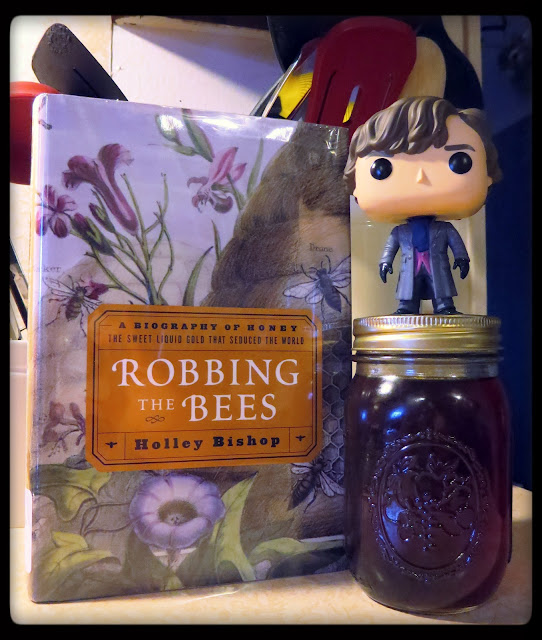
Microhistory (the first nonfiction genre we're exploring this year) is a special branch of history, looking intensively at a very small area of study - on a single subject, for instance, or a single social movement. Rather than a general, inclusive look at the past, then, microhistories tend to be narrowly focused - giving the author (and the reader) the opportunity to dive deep into minutia that would bog down a work on a broader scale. Microhistories are also an excellent way for fiction readers to branch into nonfiction, as they tend to have more of a narrative feel to them. The "hero" of the story might be an inanimate object, an abstract idea, or even a revolution - but it is a single thing, with a steady thread weaving throughout the work. Our Main Read this month was chosen by our third Readers Advisor Sherlock Holmes, so the topic won't be much of a surprise to those familiar with his retirement years activities. Check it out: Robbing the Bees: A Biogra...

Hi, February High Fantasy!

Image
Defining high fantasy as opposed to low fantasy has nothing at all to do with quality. High fantasy is set in an entirely other world, one full of magic, so it works differently than our own, non-magical world. (Think Tolkien's Lord of the Rings trilogy.) Low fantasy, by comparison, is set either in our own world or a world that works like ours, only with a bit of magic breaking through.  High fantasy often features a protagonist who begins as an innocent or even a child, and is aided by a mystical figure in order to grow into a legendary hero, battling a Dark Lord and the forces of evil (usually orcs, wraiths, dragons, and whatnot). The great struggle between good and evil tends to be front and center, with the fate of the world (or perhaps only the protagonist's part of it) at stake. Because high fantasy covers a protagonist's growth into heroic stature and a sweeping epic of good versus evil, it's difficult to fit into one book - so high fantasy ends up usually bei...

New Weird for the New Year!

Image
Before we get to New Weird, we should take a look at Old Weird! The best - or, at least, best known - examples of Weird literature were written by H.P. Lovecraft, who gave us the darkly disturbing yet strangely beautiful world of Cthulhu, the Old Ones, and the Necronomicon. Lovecraft used his macabre world to explore themes of forbidden knowledge, supernatural influences on humankind, fate, religion, and the dangers of unrestrained science. New Weird tends to explore similar themes in worlds two steps removed from our own. Alongside mankind dwells entities entirely unlike us, who may mean us harm - or may cause us harm incidentally as they pursue their own agendas. Unlike most horror, the Other is entirely inimical to us - the Monster confronting us is not a reflection of our own darkness but something incomprehensible that drives us to madness. Our Main Read for the month was chosen just for you by Cthulhu himself! (I tried to tell him that it wasn't one book but a trilogy; h...